NuScienta AI Explorers · Ages 11 to 17 · Canada
Your kid already uses AI.
Nobody taught them how it works.
Eight weeks to understand AI and learn how to use it without letting it do the thinking for them. A live class every week, labs they actually do, and a facilitator who reads every one. No coding.
- Founding North America cohort starts January 11, 2027
- Live class Sundays, 4 pm ET / 1 pm PT
- Max 30 per cohort
- Parent report at the end
- Eligible for a refund within the first two weeks
See it first:Try a 5-minute labA learner’s projectA parent check-in
Try it together · 5 minutes · free
Can your kid spot when AI gets it wrong?
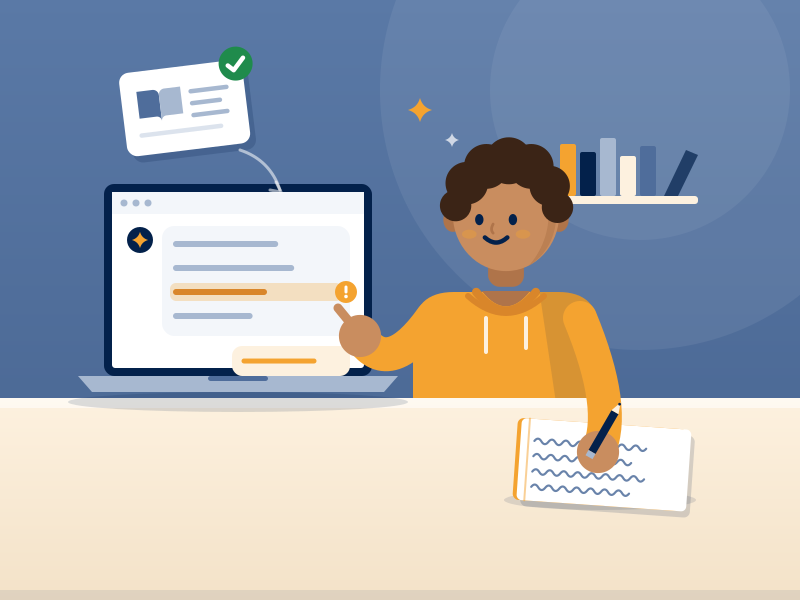
This is a real AI Explorers lab, cut down to five minutes. Write your own answer first. Then see if you can catch the AI making a mistake: one of its sentences is wrong.
What you type stays on this device. Nothing is saved or sent.
The situation: Homework due tomorrow: “Why did the Western Roman Empire fall?”
Step 1 of 5 · AI or not?- 02
- 03
- 04
- 05
It is a question you are meant to answer yourself. So should AI be part of it?
What they make · week 8 capstone
Not a certificate of attendance. A project they can explain.
Explorers don’t build an app yet; that is AI Thinkers. They design one properly: defining the problem, choosing the data, setting the rules, planning a test, and identifying who it could harm. Here is a representative project, from start to finish.
What this shows you- They can turn a real problem into something a machine could check.
- They know what data it needs, and what is missing from it.
- They test their own idea and report where it fails.
- They say what AI did and what they did.
What you see as a parent
You don’t just get access. You know how they’re doing.
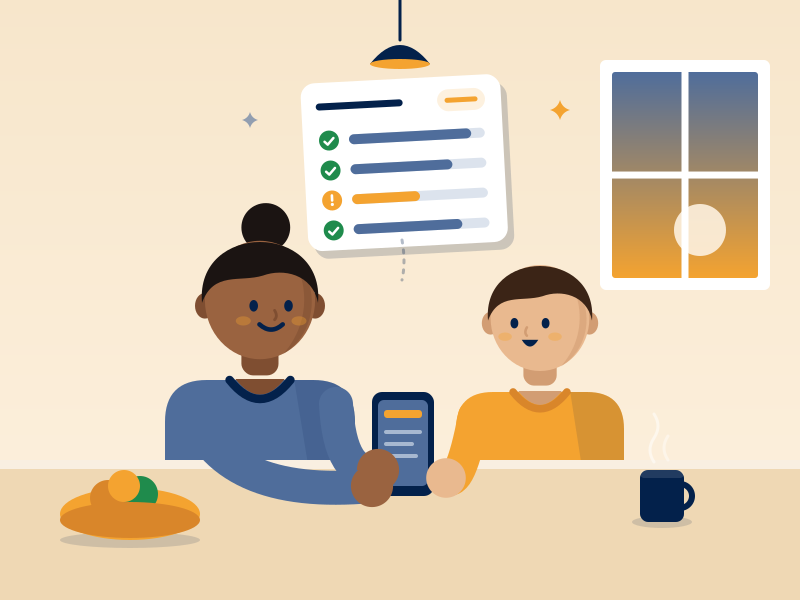
Halfway through, you get a check-in. Every lab comes back with written feedback. At the end, a report on what your kid can do, not just what they clicked.
Why it’s different
Free courses have content. We add a person.
There’s plenty of free AI material, and some of it is good. What it can’t do is notice when your kid stopped submitting labs in week four, and follow up. A facilitator does.
- Facilitator has taught or tutored young people for at least 2 years.
- Passes a police check with vulnerable sector screening, before meeting a single learner.
- Is trained in the Think-First method and our feedback rubric, and observed teaching before running a cohort alone.
- Is introduced to your family by name when your cohort is formed, and reads every lab.
A comparison of learning models, not of any one provider. Plenty of free material is good. Use it alongside.
What they’ll explore
Four chapters. Eight weeks. One idea of their own.
Each week: about two hours of lessons, a five-question quiz (70% to pass, unlimited retakes), a hands-on lab that opens with “AI or not?”, and a 60-minute live class.
-
Chapter 1 · Weeks 1 and 2
Decode AI
What AI is, how it learns from data, and how machines see and hear.
See the weeks
Week 1, What AI Is, and Isn’t. Lab: catch a chatbot pretending to understand.
Week 2, How AI Learns, and How Machines See and Hear. Lab: keep a 24-hour data diary, then reverse-engineer their own feed.
-
Chapter 2 · Weeks 3 and 4
Watch It Work
How AI decides, what every answer costs, and where it already runs their world.
See the weeks
Week 3, Instructions, Logic, and Decisions. Lab: refine one prompt three times and log what changed, and why.
Week 4, AI in the Real World, and the Cost of a Question. The energy, water and chips behind every answer. Lab: interview an adult about AI in their work.
-
Chapter 3 · Weeks 5 to 7
Challenge AI
Privacy, fairness, synthetic media, and how to tell when AI is wrong.
See the weeks
Week 5, Digital Safety and Responsible Use. Lab: audit their own digital footprint.
Week 6, Bias, Fairness, and Ethics. Lab: trace a biased output to its source.
Week 7, Confident, Fluent, and Wrong. Lab: score five AI answers on a test-case sheet, then make an AI image, label it, and argue who owns it.
-
Chapter 4 · Week 8
Create With Purpose
Design a responsible AI concept for a real problem at school or at home, and present it.
See the capstone
They pick a real problem, decide what data an AI would need, check who it could harm, and present the concept. The facilitator writes individual feedback on every one. See a full sample capstone
Built against real standards
Not a collection of ChatGPT tips.
AI Explorers is mapped to UNESCO’s AI Competency Framework for Students and the OECD-European Commission AI Literacy Framework (2026). Mapped, not endorsed: neither organization certifies courses.
What’s included
Everything they need to explore. Everything you need to stay involved.
Enrollment · Canada
Their AI future starts with understanding it.
A real teacher every week, someone who reads their work, and a report for you at the end.
Founding cohort price
Founding price until January 16, 2027, when founding enrollment closes; then CA$449. Tax included. One payment, including twelve months of NuScienta, with no automatic renewal. Founding families keep CA$359 for AI Thinkers and AI Builders too.
- Eligible for a refund within the first two weeks
- Max 30 learners per cohort
- Siblings: 10% off the second and third child, on top of the founding price
- Card checkout in CAD. Tax included. Quebec: French edition coming, join the list below
Safety and privacy
Built for kids. Every step, every detail.
- Designed around children’s privacy. Built to PIPEDA and the Privacy Commissioner of Canada’s Children’s Privacy Code.
- You hold the account. A parent or guardian signs up and consents for every learner under 18.
- A guarded sandbox. Filtered models, no personal details requested, and a session history you can see.
- A closed, moderated forum. Cohort members only, no private messages between learners.
- Recordings stay in the cohort. Only registered members can watch, and recordings are deleted when the cohort ends. They show the facilitator, never your kid.
- No ads, no data sales. Read our children’s privacy notice for exactly what we collect and why.
Questions parents ask
My kid already uses ChatGPT constantly. Isn’t this too basic?
Using it and understanding it are different skills. Heavy users often get the most out of weeks six and seven, which is roughly when they discover how often they’ve been confidently misled.
Who is the facilitator?
Each cohort has one named facilitator, introduced to your family when the cohort is formed. Every facilitator is background-checked, teaches the weekly class and reads every lab.
Will my child be on camera?
Only if they choose. Learner cameras are optional and off by default, microphones stay muted unless the facilitator invites someone to speak, and the chat is moderated. Recordings show the facilitator only.
Will an 11-year-old be in the same class as a 17-year-old?
Yes. Each class is ages 11 to 17, taught together. Lessons and labs are written so every age can do them well, and the facilitator moderates every discussion.
When is the live class?
Each cohort has its own fixed weekly time, set for evenings or weekends in your region and shown before you pay.
What if they miss a class?
Every class is recorded and available to registered members of that cohort until the cohort ends. Lessons, quizzes and labs are on-demand anyway.
Is 11 too young? Is 17 too old?
Entry depends on experience, not age. The material is written to hold a 17-year-old’s attention and still land for an 11-year-old.
Is there a limit on the AI Sandbox?
Each enrollment includes 100 guided sessions of up to about 15 minutes, well beyond what the eight labs need. More can be added if they want to keep exploring.
Can I pay for a grandchild, niece or nephew?
Yes. Choose the country the child lives in and pay by card from anywhere. We send their parent or guardian the link to give consent and set up the account, and hold the place meanwhile. We remind them twice; if they haven’t accepted by the refund deadline, you get a full refund. The parent decides whether you see the end-of-program report.
How does the refund work?
Ask within the first two weeks of the cohort and we refund the full fee. The exact date is shown before you pay.
Not in Canada?
AI Explorers runs in countries across Africa, North America and Europe, with prices, payment and class times set locally. Find your country.
The NuScienta Youth pathway
Three levels, starting with Explorers. Each ends with work they can share.
Founding-family rate: join this founding cohort and your child keeps the founding price for AI Thinkers and AI Builders when each opens. Per learner, if they finish Explorers and enroll in each next level within 12 months. Terms
January 11. Eight weeks. One kid who checks before they trust.
Seats are capped at 30 per cohort, so the live class stays a class and the facilitator can actually read every lab.
NuScienta AI Explorers · Ages 11 to 17 · {{countryName}}
Your kid already uses AI.
Nobody taught them how it works.
Eight weeks to understand AI and learn how to use it without letting it do the thinking for them. A live class every week, labs they actually do, and a facilitator who reads every one. No coding.
- {{cohortLine}}
- {{classChip}}
- Max 30 per cohort
- Parent report at the end
- Eligible for a refund within the first two weeks
See it first:Try a 5-minute labA learner’s projectA parent check-in
Try it together · 5 minutes · free
Can your kid spot when AI gets it wrong?
This is a real AI Explorers lab, cut down to five minutes. Write your own answer first. Then see if you can catch the AI making a mistake: one of its sentences is wrong.
What you type stays on this device. Nothing is saved or sent.
The situation: {{tSituation}}
{{tProgress}}- {{d.num}}
{{tAIQ}}
{{f.verdict}} {{f.text}}
No AI and no searching. Two minutes. A guess counts, and so does “not sure”.
{{tDraftCount}}It sounds sure of every line. One of them is wrong. Tap the one you’d check first.
{{f.verdict}} {{f.text}}
{{tDraftShow}}
{{tDraftNote}}What this shows: {{tLesson}}
{{tDraftShow}}
Added after checking: {{tKeptText}}
How I used AI: {{tCredit}}
- {{m.label}}
- {{m.label}} (next time)
Parents: the free Parent Briefing is five short emails, each with one thing like this to try at home. Get the Parent Briefing
What they make · week 8 capstone
Not a certificate of attendance. A project they can explain.
Explorers don’t build an app yet; that is AI Thinkers. They design one properly: defining the problem, choosing the data, setting the rules, planning a test, and identifying who it could harm. Here is a representative project, from start to finish.
What this shows you- They can turn a real problem into something a machine could check.
- They know what data it needs, and what is missing from it.
- They test their own idea and report where it fails.
- They say what AI did and what they did.
What you see as a parent
You don’t just get access. You know how they’re doing.
Halfway through, you get a check-in. Every lab comes back with written feedback. At the end, a report on what your kid can do, not just what they clicked.
Why it’s different
Free courses have content. We add a person.
There’s plenty of free AI material, and some of it is good. What it can’t do is notice when your kid stopped submitting labs in week four, and follow up. A facilitator does.
- Facilitator has taught or tutored young people for at least 2 years.
- {{checkLine}}, before meeting a single learner.
- Is trained in the Think-First method and our feedback rubric, and observed teaching before running a cohort alone.
- Is introduced to your family by name when your cohort is formed, and reads every lab.
A comparison of learning models, not of any one provider. Plenty of free material is good. Use it alongside.
What they’ll explore
Four chapters. Eight weeks. One idea of their own.
Each week: about two hours of lessons, a five-question quiz (70% to pass, unlimited retakes), a hands-on lab that opens with “AI or not?”, and a 60-minute live class.
-
Chapter 1 · Weeks 1 and 2
Decode AI
What AI is, how it learns from data, and how machines see and hear.
See the weeks
Week 1, What AI Is, and Isn’t. Lab: catch a chatbot pretending to understand.
Week 2, How AI Learns, and How Machines See and Hear. Lab: keep a 24-hour data diary, then reverse-engineer their own feed.
-
Chapter 2 · Weeks 3 and 4
Watch It Work
How AI decides, what every answer costs, and where it already runs their world.
See the weeks
Week 3, Instructions, Logic, and Decisions. Lab: refine one prompt three times and log what changed, and why.
Week 4, AI in the Real World, and the Cost of a Question. The energy, water and chips behind every answer. Lab: interview an adult about AI in their work.
-
Chapter 3 · Weeks 5 to 7
Challenge AI
Privacy, fairness, synthetic media, and how to tell when AI is wrong.
See the weeks
Week 5, Digital Safety and Responsible Use. Lab: audit their own digital footprint.
Week 6, Bias, Fairness, and Ethics. Lab: trace a biased output to its source.
Week 7, Confident, Fluent, and Wrong. Lab: score five AI answers on a test-case sheet, then make an AI image, label it, and argue who owns it.
-
Chapter 4 · Week 8
Create With Purpose
Design a responsible AI concept for a real problem at school or at home, and present it.
See the capstone
They pick a real problem, decide what data an AI would need, check who it could harm, and present the concept. The facilitator writes individual feedback on every one. See a full sample capstone
Built against real standards
Not a collection of ChatGPT tips.
AI Explorers is mapped to UNESCO’s AI Competency Framework for Students and the OECD-European Commission AI Literacy Framework (2026). Mapped, not endorsed: neither organization certifies courses.
What’s included
Everything they need to explore. Everything you need to stay involved.
Enrollment · {{countryName}}
Their AI future starts with understanding it.
A real teacher every week, someone who reads their work, and a report for you at the end.
{{priceEyebrow}}
{{priceNote}}
- Eligible for a refund within the first two weeks
- Max 30 learners per cohort
- Siblings: 10% off the second and third child, on top of the founding price
- {{currencyLine}}
Safety and privacy
Built for kids. Every step, every detail.
- Designed around children’s privacy. {{legalLine}}
- You hold the account. A parent or guardian signs up and consents for every learner under 18.
- A guarded sandbox. Filtered models, no personal details requested, and a session history you can see.
- A closed, moderated forum. Cohort members only, no private messages between learners.
- Recordings stay in the cohort. Only registered members can watch, and recordings are deleted when the cohort ends. They show the facilitator, never your kid.
- No ads, no data sales. Read our children’s privacy notice for exactly what we collect and why.
Questions parents ask
My kid already uses ChatGPT constantly. Isn’t this too basic?
Using it and understanding it are different skills. Heavy users often get the most out of weeks six and seven, which is roughly when they discover how often they’ve been confidently misled.
Who is the facilitator?
Each cohort has one named facilitator, introduced to your family when the cohort is formed. Every facilitator is background-checked, teaches the weekly class and reads every lab.
Will my child be on camera?
Only if they choose. Learner cameras are optional and off by default, microphones stay muted unless the facilitator invites someone to speak, and the chat is moderated. Recordings show the facilitator only.
Will an 11-year-old be in the same class as a 17-year-old?
Yes. Each class is ages 11 to 17, taught together. Lessons and labs are written so every age can do them well, and the facilitator moderates every discussion.
When is the live class?
Each cohort has its own fixed weekly time, set for evenings or weekends in your region and shown before you pay.
What if they miss a class?
Every class is recorded and available to registered members of that cohort until the cohort ends. Lessons, quizzes and labs are on-demand anyway.
Is 11 too young? Is 17 too old?
Entry depends on experience, not age. The material is written to hold a 17-year-old’s attention and still land for an 11-year-old.
Is there a limit on the AI Sandbox?
Each enrollment includes 100 guided sessions of up to about 15 minutes, well beyond what the eight labs need. More can be added if they want to keep exploring.
Can I pay for a grandchild, niece or nephew?
Yes. Choose the country the child lives in and pay by card from anywhere. We send their parent or guardian the link to give consent and set up the account, and hold the place meanwhile. We remind them twice; if they haven’t accepted by the refund deadline, you get a full refund. The parent decides whether you see the end-of-program report.
How does the refund work?
Ask within the first two weeks of the cohort and we refund the full fee. The exact date is shown before you pay.
{{notHereQ}}
AI Explorers runs in countries across Africa, North America and Europe, with prices, payment and class times set locally. Find your country.
The NuScienta Youth pathway
Three levels, starting with Explorers. Each ends with work they can share.
Founding-family rate: join this founding cohort and your child keeps the founding price for AI Thinkers and AI Builders when each opens. Per learner, if they finish Explorers and enroll in each next level within 12 months. Terms
{{closingHeadline}}
Seats are capped at 30 per cohort, so the live class stays a class and the facilitator can actually read every lab.